Skip to content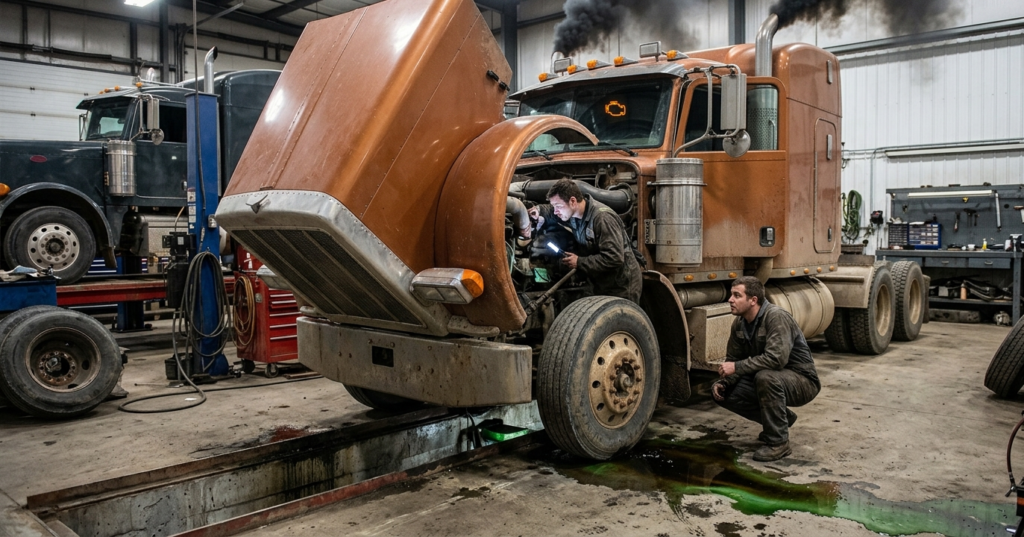
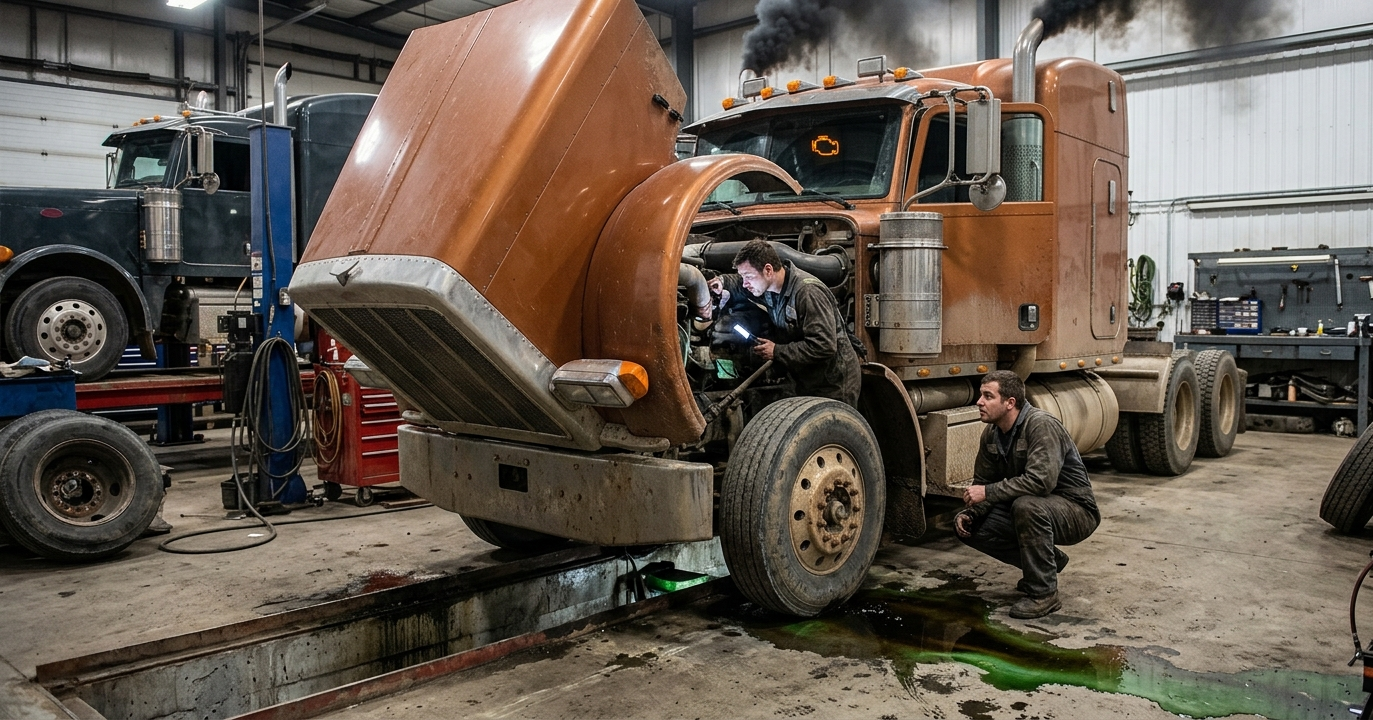
Don’t Ignore These Warning Signs: When a commercial truck starts showing warning signs, most drivers assume they can push through to the end of the route. Sometimes they can. But with heavy-duty vehicles, ignoring the early signals is almost always more expensive than stopping and calling a mechanic.
This blog covers the seven most critical warning signs and what to do about each one before a small problem becomes a fleet emergency.
Your commercial truck is not a passenger car. It works harder, carries more weight, runs more miles, and operates under conditions that would destroy a regular vehicle in weeks. That demands a different level of attention and a different standard for what counts as an urgent repair versus something that can wait until next week.
At Dave’s Fleet Repair Inc. in Freeport, NY, we have been working on commercial trucks across Long Island for over 20 years. We have seen what happens when drivers push through warning signs on the road and we have seen the repair bills that follow.
The seven signs below are the ones our mechanics flag as act-now situations. If your truck is showing any of them, do not wait.
| Warning Sign | Urgency Level | Recommended Action |
| Check Engine / MIL Light | 🔴 CRITICAL | Pull over and call — do not guess at fault codes |
| Unusual Engine Noises | 🔴 CRITICAL | Stop driving immediately — knocking = internal damage |
| Brake Problems | 🔴 CRITICAL | Do not operate until brakes are fully inspected |
| Excessive Smoke | 🟠 URGENT | Identify color and call your mechanic same day |
| Fluid Leaks | 🟠 URGENT | Identify fluid and book repair within 24–48 hours |
| Transmission Slipping | 🟡 SERIOUS | Avoid heavy loads; schedule immediately |
| Vibration or Pull | 🟡 SERIOUS | Reduce speed; have steering + suspension checked |
The Check Engine Light (or MIL) Comes On
Urgency: CRITICAL — Stop and Call
The Malfunction Indicator Light (MIL): what most drivers call the check engine light is the most misunderstood warning on a commercial truck dashboard. Some drivers see it and think it’s probably nothing. It is almost never nothing.
On a modern diesel commercial truck, that light is connected to the Engine Control Module (ECM), which monitors dozens of systems simultaneously. When it triggers, it means the ECM has logged a diagnostic trouble code (DTC) that requires attention. Some codes are minor. Many are not.
The specific codes that demand immediate action include:
- P0087 / P0089 — Low fuel rail pressure: indicates fuel system failure
- P0113 / P0118 — Intake air or coolant temp sensor out of range: risk of overheating
- P2002 / P2003 — DPF efficiency below threshold: emissions and performance affected
- P0191 / P0192 — Fuel pressure regulator fault: engine may stall or lose power
- SPN 3226 / FMI 31 — Aftertreatment issues: on a diesel truck, this can trigger a derate or shutdown
| Dave’s Take: We see trucks come in here all the time where the driver has been running with an active DTC for two weeks. In about half those cases, what started as a $300 sensor fix has turned into a $1,800 repair because the root cause went unaddressed. Get it scanned same day. |
Unusual Engine Noises — Knocking, Ticking, or Rattling
Urgency: CRITICAL — Stop Immediately
A healthy commercial truck engine has a specific, consistent sound. When that sound changes especially when you hear knocking, deep ticking, or a persistent rattle something mechanical is wrong inside the engine. This is not a wait and see situation.
Here is what different sounds typically mean on a diesel commercial truck:
| Sound | What It Usually Means |
| Deep knocking | Rod knock — a connecting rod bearing is failing. If you keep driving, you risk a catastrophic engine failure. Pull over. |
| Rapid ticking at idle | Often a valve train issue or low oil pressure. Can also indicate a collapsed lifter or worn cam followers. |
| Metallic rattling on startup | Timing chain slack or a failing tensioner. Timing failures on diesel engines can destroy the entire top end. |
| High-pitched squealing | Belt-driven accessories — alternator, power steering pump, or air compressor. Not always critical, but can strand you. |
| Knocking only under load | Piston slap or wrist pin wear. Worse under acceleration or when hauling — do not push it. |
The rule of thumb: if the noise is new, get it diagnosed. If it is getting louder, stop driving. The cost of a diagnostic visit to a commercial truck repair shop on Long Island is a fraction of what you will pay if a failing component destroys the engine.
Brake Problems — Soft Pedal, Pulling, or Grinding
Urgency: CRITICAL — Do Not Drive
There is no gray area here. If the brakes on your commercial truck are behaving strangely, that vehicle should not be on the road until a certified mechanic has cleared it. A loaded commercial truck doing highway speed with compromised brakes is not a repair you defer it is a liability that can end in tragedy.
The brake warning signs that demand immediate attention:
- Soft or spongy pedal: Air in the brake lines, low brake fluid, or a failing master cylinder.
- Pulling to one side when braking: Uneven pad wear, a stuck caliper, or brake system imbalance especially dangerous on a loaded truck.
- Grinding or metal-on-metal sound: Pads are worn through to the rotors. The rotors are now being damaged with every stop.
- Brake warning light: ABS fault, low fluid, or electronic braking system issue all require immediate diagnosis.
- Extended stopping distance: If your truck is taking longer to stop than usual, your braking system is compromised. Period.
| Long Island-Specific Note: Stop-and-go traffic on the LIE, Southern State, and local commercial routes puts enormous strain on commercial truck brake systems. We see brake wear that would take two years on a rural highway happen in eight months here. If your truck is running daily in Nassau County or Suffolk, your brakes need to be on a more aggressive inspection schedule than the manufacturer’s baseline. |
Excessive or Unusual Exhaust Smoke Urgency:
URGENT — Call Same Day
Every diesel truck produces some exhaust, especially on cold starts. But if your truck is putting out excessive smoke, or smoke that is a color it should not be, that exhaust is telling you something specific about what is happening inside the engine. Learning to read smoke color is one of the most practical skills a fleet manager on Long Island can have.
| Smoke Color | Likely Cause | What to Do |
| Black smoke | Overly rich fuel mixture — dirty air filter, injector issues, or a boost leak in the turbo system | Schedule same-day — black smoke means the engine is working inefficiently and burning excess fuel |
| White smoke | Cold start (normal) OR unburned fuel OR coolant entering combustion — potentially a head gasket failure | If it persists after warmup, pull over immediately — coolant in the cylinder is catastrophic |
| Blue smoke | Engine oil burning in the combustion chamber — worn rings, valve seals, or a failed turbo seal | Call for service today — sustained oil consumption leads to engine damage and possible seizure |
| White steam (hot) | Usually condensation on a cold start — normal in winter months on Long Island | Monitor: if it continues past 5 minutes after warmup or smells sweet, it may be coolant |
Fluid Leaks Under the Truck Urgency:
URGENT — Book Within 24 Hours
Finding a puddle under your commercial truck is never a good sign but not all leaks carry the same risk level. Knowing what you are looking at helps you decide how fast to act.
Here is how to quickly identify a fluid leak before you call a truck and fleet repair mechanic in Freeport or anywhere else on Long Island:
- Dark brown or black puddle — Engine oil. Location matters: under the front of the engine suggests a front main seal or gasket leak; near the drain plug, a loose plug or worn washer.
- Red or pink fluid — Transmission fluid or power steering fluid. If the puddle is under the front center of the truck, power steering. Under the middle or rear, transmission.
- Bright green, orange, or pink fluid (sweet smell) — Coolant. This one is serious. A coolant leak can cause overheating in as little as 20–30 minutes of highway driving.
- Clear or light yellow fluid — Could be diesel exhaust fluid (DEF) or brake fluid. Brake fluid near a wheel is an immediate stop — do not drive the truck.
- Diesel fuel — Smell and brown-yellow tint. Any fuel leak is a fire hazard. Park it and call immediately.
A slow drip might seem manageable, but fluid leaks almost always get worse under load and heat. If you operate a fleet in Nassau County and you see a leak, document it with a photo, note the location under the truck, and call your Long Island heavy-duty truck mechanic before that truck goes back on the road.
Transmission Slipping or Delayed Gear Changes Urgency:
SERIOUS — Schedule Immediately
Transmission problems in a commercial truck are one of the most expensive repairs you can face and they almost always give you advance warning before they fail completely. The drivers who catch it early pay for a transmission service. The drivers who ignore it pay for a rebuild.
Warning signs that your commercial truck transmission needs attention:
- Slipping gears: The truck is in gear but the engine revs without a corresponding increase in speed. Feels like the clutch is slipping, even on an automatic.
- Delayed engagement: You shift from Park to Drive or shift up a gear and there is a noticeable pause before the truck responds. Not normal — not on a truck that size.
- Rough or harsh shifts: Each gear change feels like a jolt rather than a smooth transition. Often caused by worn clutch packs, low fluid, or solenoid issues.
- Transmission warning light: Modern commercial trucks have dedicated transmission monitoring. If that light comes on, get it scanned before your next run.
- Burning smell from the transmission area: Overheated or degraded transmission fluid. This is the system telling you it is already running in distress.
| The Cost Comparison: A transmission fluid service on a commercial truck typically costs $200–$450. A transmission rebuild or replacement on a Class 6–7 truck can run $3,500–$8,000 or more. Catch the signs early and the math is simple. |
Steering Pulling, Vibration, or Loose Handling Urgency:
SERIOUS — Reduce Speed and Schedule
When a commercial truck starts pulling to one side, vibrating at highway speed, or the steering wheel feels loose or unresponsive, there is a problem in the steering, suspension, or tire/wheel system. On a vehicle that weighs 10,000–26,000 pounds fully loaded, these are not comfort issues they are control issues.
Here is what the symptoms usually indicate:
- Pulling to the left or right: Uneven tire pressure, misaligned wheels, a stuck brake caliper, or uneven tire wear. Start with the simplest check — pressure — then call if it persists.
- Vibration in the steering wheel at speed: Wheel balance issue, a bent rim, worn wheel bearings, or driveshaft imbalance. On a long-haul truck, this gets worse the faster you go.
- Excessive play in the steering wheel: Worn steering gear, loose tie rod ends, or worn king pins. On a heavy-duty truck, steering play that feels minor at 20 mph becomes dangerous at 60 mph.
- Bouncing or swaying on turns: Worn shocks or struts on a truck that carries significant cargo weight can cause load shifts. Not just uncomfortable — it affects your braking distance.
If your truck is showing any of these signs, reduce highway speeds until it is inspected. Steering and suspension failures on a loaded commercial truck do not give you a second warning.
Before hire a truck repair mechanic you should know about how to choose fleet repair shop. If you are based anywhere in Nassau County or need a truck repair near Freeport, our shop is equipped to diagnose and fix suspension and steering issues on the same day in most cases.
What to Do If Your Truck Is Showing These Signs
If your commercial truck is showing any of the seven warning signs above, here is the straightforward advice we give every fleet owner who calls us:
- Signs 1, 2, or 3 (check engine, engine noise, or brake issues): Pull over or park the truck. Do not run another route. Call for service immediately.
- Signs 4 or 5 (smoke or fluid leaks): Document it with a photo, assess severity, and book a same-day or next-day appointment. Do not run long routes.
- Signs 6 or 7 (transmission or steering): Reduce load and speed. Book the truck in within 48 hours — do not wait for it to get worse.
In every case: call a certified mechanic who specializes in commercial truck repair not a general auto shop that occasionally looks at trucks. The diagnostic process is different, the parts are different, and the stakes are higher.
| Is Your Truck Showing Any of These Signs? Visit Dave’s Fleet Repair Inc. right now. We are Long Island’s commercial truck and fleet specialists, based in Freeport, NY. Over 20 years of experience. Fast turnaround. Transparent pricing. Call Now: (516) 451-9587 davefleetrepair.com | Freeport, NY | Serving all of Long Island & Nassau County |
FAQs: Commercial Truck Repair Signs
How do I know if my commercial truck problem is urgent?
If the issue involves brakes, engine noises, steering control, or an active check engine light with unknown codes it is urgent. When in doubt, call a commercial truck shop on Long Island and describe what you are seeing. A good mechanic will tell you honestly whether it can wait.
Can I drive my commercial truck with the check engine light on?
It depends entirely on what code triggered the light. Some faults are minor; others are precursors to serious failures. Never assume it is nothing get it scanned. Many truck engine problems that look minor on the surface become major failures when the truck is put back under load.
Where can I find a commercial truck mechanic near Long Island?
Dave’s Fleet Repair Inc. is located in Freeport, NY centrally positioned in Nassau County to serve businesses across Long Island. We specialize in commercial trucks, diesel engines, and fleet maintenance. Call us at (516) 451-9587 or visit davefleetrepair.com to schedule service.
How often should commercial trucks be inspected for these issues?
At minimum, commercial trucks should have a full inspection every 6 months or every 25,000–30,000 miles, whichever comes first. Trucks running in high-demand conditions like daily delivery routes on Long Island benefit from quarterly inspections. A preventive maintenance schedule from your fleet shop is the best way to catch these seven signs before they become emergency repairs.